
Building a Practice Plan: Ten Key Steps to Ensure a Successful Practice
Building a Practice Plan: Ten Key Steps to Ensure a Successful Practice
 Erin
Erin
Learning a musical instrument no doubt takes dedication, and the more accomplished you want to be the more you practice. How you put the time in to practice is important! Practice without a plan can sometimes lead you to roadblocks and even a dead end. Here are 10 key steps to create a successful practice.
1. Establish Your Practice Space
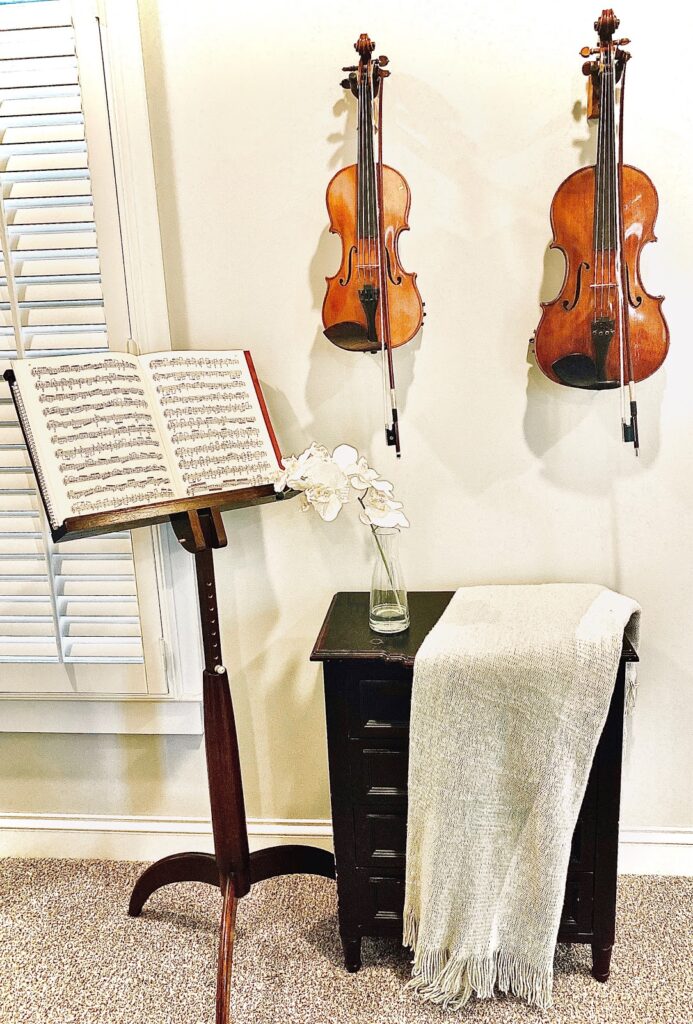
Creating a space for musical practice is not only important for keeping all of your music essentials in one place, but it also sets the tone for how you value the importance of practice. Having a good stand, music, access to recordings, lighting, space for movement, and ideally, away from household distractions is important for focus and productivity.
2. Create a Listening Routine
Listening to music related to practice is the easiest and most underrated resource we have in our musical toolbox. Listening is a great resource in studying the music we are working on and also a way to set the tone and in preparation for practice. Many times a student will practice something over and over, developing a muscle memory only to realize that they were playing it wrong the whole time. I tell my students “for every time you practice something incorrectly you will need to play it 5 times correctly to undo the muscle memory of the incorrect passage”.
Here’s my biggest practicing hack: By simply listening to the pieces a student is working on can help shave off lots of practice time!
3. Scales
As a teenage student, I didn’t respect the scales until I understood that knowledge of scales is power. Scales can transform and expedite the learning process. Understanding the geography of the scale and knowing which note you are playing at all times is key to mastery of an instrument and the respective piece a musician is learning. Also, using a tuner during slow scales is a great option for ensuring good intonation. A tuner never lies!
4. Tone Production
Depending on your instrument, practicing tonal exercises is paramount. Without a good tone how can we communicate through our instrument? Tone is the voice of our instrument and through that, we can create beauty through sound. It’s just like stretching. Many forget or think it isn’t as important as the actual exercise but we all know it enhances our performance a great deal.
5. Warmup Pieces and Etudes
Practicing a piece that compliments your working piece is a great way to reinforce the techniques you are working on. For example, if you are teaching your student how to play in a new key, go back to an easy review piece and ask them to play it in the new key. Because the ear is strong and the piece is easy, this helps the student understand the geography of the key with their respective instrument.
6. Working Pieces
Many times we practice too fast. When we practice way too fast too soon, there is no opportunity to develop muscle memory and subsequent mastery! Working pieces will always have a potential roadblock and the possibility of “getting stuck”. Have you ever been stuck on a piece and it just wasn’t getting better? Using a metronome may seem mundane, but it is a very effective tool in relaxing and preparing the body for muscle memory. Start very slow, much slower than you want to! One click at a time, start building your tempo. You will be amazed at how much more relaxed and confident you will be at playing those tricky passages that once made you feel stuck. Slow and steady wins the race.
7. Polished Pieces
These pieces contain a level of mastery and now we are just putting all the shine and sprinkles on top. By this point, pieces should be memorized. *note about memorization* Memorization is the by-product of mastery, not the goal. Dynamics, vibrato speed, articulations, etc are finalized in this stage.
8. Review Pieces
Review is the glue to learning your instrument! Many also discard review but it is a HUGE mistake! Review is the glue that hones in all the techniques you have learned over time. Keeping review pieces polished is also a sure-fire way to be the hit of your family gatherings or get-togethers with friends. When they ask you to play, you can confidently play song after song, because it is retained in your memory bank.

9. Be Smart About Practice
Prioritizing practice is the #1 thing you can do to ensure success in learning an instrument. Try to establish a time each day. Put it on your calendar. Make it a non-negotiable and show up! Most importantly, make your instrument, music, and tools accessible. For those that have trouble scheduling their practice due to busy schedules, I suggest habit stacking. This is simply pairing practice next to an already established daily habit. This is a great way to establish routine, especially when our schedules get hectic.
10. Be ok to Fail
Don’t Put too Much Pressure on Yourself—While mastery is the goal, perfection is not. Fear of making mistakes can inhibit practice and may result in the instrument not even making it into your hands. And remember: making mistakes is key to learning! Without failure, there is no growth.